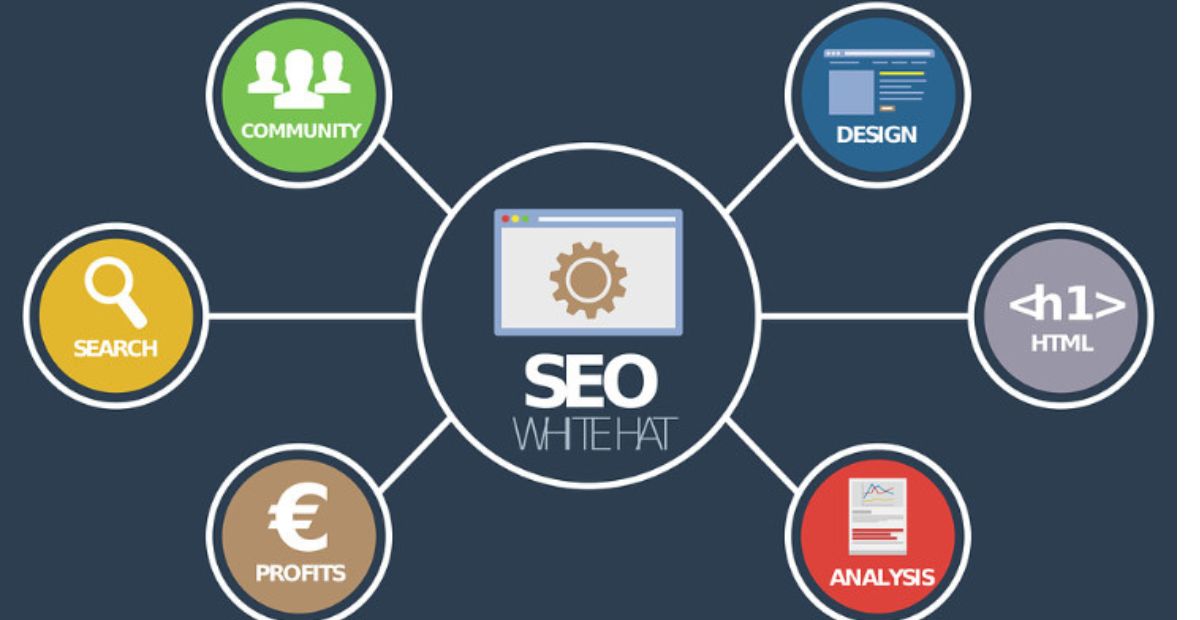
SEO also known as Search Engine Optimization, refers to improving your website to increase your visibility when customers search for goods or services associated with your business on Google, Bing, and other search engines. The more visible your pages are in search engine results, the more likely they will catch people’s attention and draw in current and potential customers.
Types of Search Engine Optimization
- Onpage Activity
- Offpage Activity
Before learning about On-page and Off-page Search Engine Optimization, Let’s discuss Search Engines.
How does a Search Engine work?
Search Engines like Google and Bing use bots to crawl web pages while moving between different websites, gathering data about those pages and adding them to an index. Imagine the index as a massive library where a librarian could open a book (or a website) to help them find the specific item they are looking for.
Note: To learn more about SEO, Join our SEO Course
What makes SEO important for marketing?
To get information about products and services, people do millions of searches each year, many of which have commercial goals. As a result, it is a crucial component of digital marketing. The search engine is typically the main source of digital traffic for brands and it works in conjunction with other marketing channels. Greater visibility and a higher ranking in the search results for their competitors could have a significant impact on their outcomes.
ON-PAGE
The practice of optimizing elements on web pages for Search Engine Optimization is known as On-page, although it is more difficult than it first appears.
Its name refers to the broad combination of technical and content geared toward the optimization of particular web pages. This practice includes content, but it also includes meta descriptions, titles, links, and annotating text, among other things.
OFF-PAGE
The term Off-page refers to all strategies that don’t include updating or publishing content on a website.
The terms Off-page and “building links” were frequently used interchangeably in the past, but in reality, there are several Off-page tactics that can be used, including:
- brand building
- citation building
- content marketing
- social media, and more.
Technical Search Engine Optimization
1. Website Speed Optimization
- Fast loading websites rank better on Google.
- Use compressed images, caching, and CDN to improve speed.
- Recommended loading time: under 3 seconds.
2. Mobile Friendliness
- Your website should be fully responsive on mobile devices.
- Google uses mobile-first indexing, so mobile optimization is very important.
3. Secure Website (HTTPS)
- Always use HTTPS SSL certificate.
- Secure websites improve trust and ranking.
4. XML Sitemap
- An XML sitemap helps search engines understand all pages of your website.
- Submit your sitemap in Google Search Console.
5. Robots.txt File
- Robots.txt tells search engines which pages to crawl or not crawl.
- It helps manage website crawling efficiently.
6. URL Structure
- Use short, clean, keyword-rich URLs.
Example:yourwebsite.com/seo-benefits-2026
7. Structured Data (Schema Markup)
- Add schema markup to help Google understand your content better.
- It can help you get rich results in search.
8. Fix Broken Links
- Broken links create bad user experience and hurt SEO.
- Regularly check and fix 404 errors.
9. Canonical Tags
- Canonical tags prevent duplicate content issues.
- They tell search engines which page is the main version.
10. Core Web Vitals
Google measures user experience through:
- LCP (Largest Contentful Paint)
- FID (First Input Delay)
- CLS (Cumulative Layout Shift)
Good scores improve ranking.
Types of Search Engine Optimization Techniques
- White hat – according to search engine policy
- Black hat – against the policy
- Gray hat– mix of white and black hat
- Negative – decreases the ranking
- Local – local promotion on map or search
- Technical – website design,
website speed, mobile-friendly, design layout, server, security
Following Benefits of Search Engine Optimization Activities:
- Increase Traffic on a Website, Blog, Video, and App
- Generate Leads
- Getting Leads
- Helps in Brand Awareness Promotion
- Improve ROI Of Business

| Follow Us On Google News | Click Here |
| Facebook Page | Click Here |
| Telegram Channel | Click Here |
| Click Here | |
| Website | Click Here |
FAQs
1.What is Search Engine Optimization?
(Search Engine Optimization) is the process of improving a website to rank higher on search engines like Google.
2.Why is this important in 2026?
SEO helps businesses get organic traffic, increase visibility, and generate more leads online.
3.How does it work?
Search Engine Optimization works by optimizing content, keywords, website structure, and backlinks to improve search engine rankings.
4.What are the main types of Search Engine Optimization?
The main types are On-Page , Off-Page, and Technica Search Engine Optimization
5.How long does SEO take to show results?
SEO usually takes 3 to 6 months to show noticeable results.
6.Is SEO better than paid ads?
SEO provides long-term organic traffic, while ads give faster but temporary results.
7.What are SEO keywords?
Keywords are the words or phrases people type in search engines to find information.
8.Can beginners learn SEO easily?
Yes, beginners can learn SEO with proper training, practice, and real projects.
9.Is SEO a good career in 2026?
Yes, Search Engine Optimization is a high-demand digital marketing skill with many job and freelance opportunities.
10.What tools are used in SEO?
Popular SEO tools include Google Search Console, Google Analytics, Ahrefs, and SEMrush.
11.Does SEO help small businesses?
Yes, SEO helps small businesses get more online visibility and attract local customers.
12.Is SEO still relevant in 2026?
Yes, SEO remains one of the most effective ways to drive organic traffic and grow online businesses.