Quick answer: Difference between SEO and SEM: SEO (Search Engine Optimization) is the practice of improving your website to earn free, organic rankings in search results. SEM (Search Engine Marketing) is the practice of buying visibility through paid ads, such as Google Ads. SEO is slower and builds long-term value, while SEM is faster and depends on your budget. In 2026, both need to work alongside GEO and AEO, because people now get answers from AI tools as well as traditional search results.
Table of Contents
- What is SEO?
- What is SEM?
- SEO vs SEM: Key Differences
- How SEO Works in 2026
- How SEM Works in 2026
- What Are AEO and GEO?
- Which One Should You Choose?
- FAQs
What is SEO?
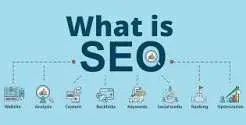
SEO helps your website appear at the top of Google, Bing, or AI search tools without paying for each click. It rests on three pillars:
- On-page SEO: keywords, title tags, headings, content quality, and internal links.
- Technical SEO: site speed, mobile-friendliness, crawlability, schema markup, and HTTPS security.
- Off-page SEO: backlinks, brand mentions, reviews, and online reputation.
SEO usually takes a few months to show results, but once a page ranks, it can bring in traffic for a long time at no per-click cost.
What is SEM?
SEM means promoting your website through paid search. In practice, it usually refers to PPC (Pay-Per-Click) advertising on platforms like Google Ads and Microsoft Advertising. You bid on keywords, and when someone searches for them, your ad can appear above the organic results. You pay only when someone clicks.
Note: Some marketers use SEM as an umbrella term covering both SEO and paid ads. Today, most of the industry uses SEM to mean paid search.
SEO vs SEM: Key Differences
| Factor | SEO | SEM |
|---|---|---|
| Cost | No cost per click, but needs investment in content, tools, and people | You pay for every click |
| Speed | Weeks to months to see results | Traffic starts as soon as the campaign goes live |
| Duration | Long-term, traffic continues once you rank | Traffic stops when the budget stops |
| Placement | Organic results, featured snippets, AI answers | Ad slots at the top or bottom of results |
| Trust | Users tend to trust organic results more | Slightly lower, due to the “Ad” label |
| Best for | Brand authority and sustainable growth | Launches, offers, and quick leads |
| Control | Depends on search algorithms | Full control over budget, audience, and timing |
How SEO Works in 2026
SEO in 2026 is no longer just about keywords. Search engines reward helpful, original, experience-based content.
- Focus on E-E-A-T: Experience, Expertise, Authoritativeness, and Trustworthiness. Add author bios, real examples, and credible sources.
- Match search intent: Work out whether the user wants to learn, compare, or buy, and shape your content around that.
- Maintain technical health: Fast loading, mobile-first design, a clean site structure, and structured data.
- Build topical authority: Cover a topic with a full cluster of related content, not just a single post.
- Strengthen brand signals: Mentions, reviews, and backlinks matter, because AI tools also tend to cite trusted brands.
How SEM Works in 2026
Automation and AI now play a big role in paid search:
- Keyword and audience targeting: Use intent-based keywords and audience signals.
- Auction system: Ad rank depends on your bid, ad quality, and expected click-through rate.
- AI-driven campaigns: Smart bidding, broad match, and automated formats such as Performance Max are common, so strong creatives and accurate conversion tracking are essential.
- Landing page experience: A relevant, fast landing page improves both Quality Score and conversions.
- Measurement: Track CPC, CTR, conversion rate, CPA, and ROAS.
What Are AEO and GEO? (And Why They Matter in 2026)
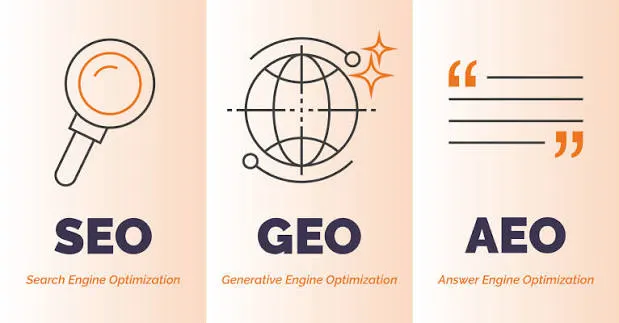
People now get answers from Google AI Overviews, ChatGPT, Perplexity, and voice assistants, not just from lists of blue links. That is why two newer concepts have become important.
AEO (Answer Engine Optimization): Writing content so that search engines and voice assistants can pull a direct answer from your page. This covers featured snippets, “People Also Ask” boxes, and voice answers.
GEO (Generative Engine Optimization): Optimizing your content so AI tools like ChatGPT, Gemini, Perplexity, and AI Overviews cite or reference you in their generated answers.
Practical tips for AEO and GEO:
- Start each section with a direct answer of 40-60 words.
- Use questions as headings (H2/H3), such as “What is SEM?”
- Add an FAQ section with FAQ, Article, and Organization schema markup.
- Use clear facts, definitions, and comparison tables, since structured information is easier for AI to understand.
- Include original data, case studies, and expert quotes.
- Show the author’s name, credentials, and a last-updated date.
- Get your brand mentioned on multiple trusted platforms, such as guest posts, directories, and review sites.
- Check your robots.txt and site settings to make sure you are not blocking the AI crawlers you want to allow.
Simple formula: SEO = ranking, AEO = direct answers, GEO = AI citations. All three support each other.
Which One Should You Choose?
- New business, launch, or special offer: Use SEM for immediate traffic while you lay the foundation for SEO.
- Limited budget and long-term goals: Put more weight on SEO plus AEO/GEO.
- Competitive industry: Run both together. SEM brings quick leads, and SEO builds sustainable traffic.
- Best strategy: Use your SEM keyword and ad data to see which keywords actually convert, then build SEO content around those terms.
FAQs
1. What is the main difference between SEO and SEM?
SEO earns free organic traffic but takes time. SEM uses paid ads to bring traffic immediately, but you pay for every click.
2. Does SEM include SEO?
Some people define SEM as SEO plus paid ads, but today it most commonly means paid search marketing.
3. Does SEO still work in 2026?
Yes. But ranking in blue links alone is no longer enough. You also need to optimize for AI answers and snippets through AEO and GEO.
4. What is the difference between GEO and AEO?
AEO targets direct answers from search engines and voice assistants, such as featured snippets. GEO targets citations inside AI chatbots and generative search tools.
5. Should beginners learn SEO or SEM first?
Learning the basics of both is best. If you want quick results, start with SEM. If you want long-term career or business growth, start with SEO.
Conclusion
SEO and SEM are partners, not rivals. SEO gives you long-term authority and free traffic, while SEM gives you speed and control. In 2026, the winning approach is to plan SEO, SEM, AEO, and GEO together: create content that is helpful to people, optimized for search engines, and worth citing for AI tools.
Thank you for reading Difference between SEO and SEM